
Unrequited
The art of not wearing your heart on your sleeve

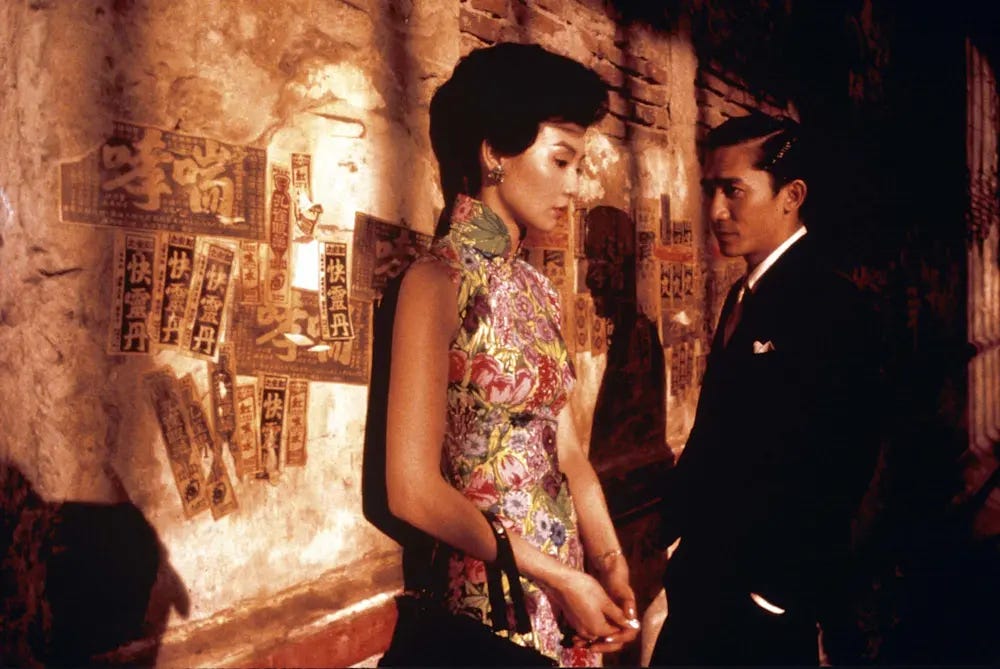
Quizas, quizas, quizas.
Perhaps. In triplicate. Maybe the most famous track (though not the best) from one of my favorite Nat “King” Cole albums, Cole Español. At the beginning of my paycheck career, I had to take a compulsory Spanish course at my agency’s academy at the Federal Law Enforcement Training Center and only came away with a rudimentary understanding of the lyrics. An increasingly impatient—maybe desperate—protagonist is frustrated with the rebuff of “perhaps.” It’s not really a refusal, which is probably why he keeps trying for the duration of the song. Most would have given up by the end of the second verse.
But maybe hanging around for an ambiguous response is the point. Perhaps is neither a yes nor a no. It’s an answer that postpones the inevitable, and sometimes it postpones it indefinitely. And believe it or not, some of us are at home in that space between fulfillment and rejection.
This is what one of my favorite films is all about. Those who find it tragic don’t get it.
Wong Kar-wai’s 2000 masterpiece In the Mood for Love is on many top ten critical lists, including, most recently, the New York Times’ “Best 100 Movies of the 21st Century,” where they polled more than 5,000 “filmmakers, stars and influential fans” to come up with a list of their top ten movies of the new century. In the Mood for Love was Number 4. (As a special side note, Studio Ghibli’s Spirited Away also broke the top ten at Number 9, but it’s not my favorite Ghibli offering: that honor belongs to From Up on Poppy Hill, which was coincidentally set in 1962 like In the Mood for Love.) That tells you that many people—people who know what they’re talking about—adore In the Mood for Love. Critics have recounted what makes it so great in their eyes, and most opinions can be neatly summed up by this quote in the Times list by Sofia Coppola: “It really blew my mind that you could make films in that way, as a poetic medium that doesn’t have to spell everything out. It felt like something I hadn’t seen before, and it was really inspiring to make things that were more impressionistic.”
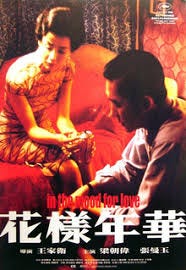
Most praises for the film are thus. And there’s admiration for the cinematography. The intimacy in the way Tony Leung and Maggie Cheung are captured passing each other in slow motion on a dank staircase leading down to a noodle stand, not even making eye contact but feeling each other’s presence. Most shots are through portals: characters are seen through doorways and windows, between pillars, almost always framed by the “walls” around the open space, giving the viewer a voyeuristic vantage point. The costuming is just great. Leung in dark Hong Kong-tailored silk suits with pomade-slick hair and an ever-present cigarette, Cheung in brilliant cheongsams with four-inch-high collars, big false eyelashes and a bouffant coif. Both are impossibly attractive and nail that mid-century elegance I love so much. I’d argue that the same chemistry between the leads could not have been created had Wong set the film in any other era. The period look, and its attendant constraints, are a critical element to the interaction between the leads.
The music, like the setting, becomes a main character. Shigeru Umebayashi’s mournful violin is heavy with longing. Wong’s use of Umebayashi’s “Yumeji’s Theme” conveys introspection, often while characters move in slow motion or are shot looking ponderous or weary. In contrast, the delightful staccato strings and Latin rhythm of the Cole Español selections almost change the lighting. Wong has said that he selected the album because it was one of his mother’s favorites. It was an inspired choice. Though most critics cite “Quizas, Quizas, Quizas” as the most emblematic tune used, it isn’t my favorite. My preference is for the lilting “Acercate Mas” or the silkily seductive “Te Quiero Dijiste,” both of which imbue the smoke-filled, lampshaded or scantily sunlit spaces with a low-key charm. Cole Español was released in 1958, which predates the setting of the movie by a few years but lends it a backward-looking rather than a forward-looking feel. Nostalgia.
Where I part ways with most critics who love In the Mood for Love is in the assessment of the lack of consummation of the leads’ relationship as somehow heartbreaking. It’s understandable why most Western audiences would perceive it this way—and maybe a fair number of non-Western audiences—but I’ve always understood their “doomed” liaison to have played out as it should have.
The story, in a nutshell, is that a journalist (Leung) and a secretary (Cheung) with their respective spouses become next-door neighbors in a cramped apartment building in Hong Kong of the early 1960s. They find out that their spouses are having an affair with each other, which prompts meetings between the two of them to commiserate and engage in an unusual form of self-therapy, where they roleplay each other’s spouses and attempt to reenact their interactions, speculating on how—and perhaps why—the illicit relationship came to be. They gradually and inevitably fall for each other, and the meetings and enactments become a thin pretext for being with each other. Their own encounters come to resemble trysts, frequent and secretive, though they do not allow themselves to physically indulge in each other, citing the trope of not stooping to the level of their cheating spouses. In the end, they terminate their relationship, though they both yearn for each other.
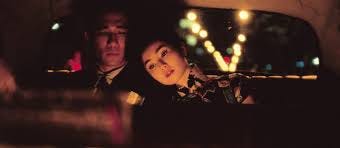
Those who consider that the characters failed to establish a true relationship based on their misgivings to be unfortunate have missed the fact that they did have a real relationship. Though their intimacy was not conveyed with overt acts of sex or frequent verbal declarations, it was present in the vacant spaces between words and actions, in the mutual silence in each other’s presence, in the pondering between their liaisons. This is what makes the film beautiful, not the tragedy of unfulfillment. Many real connections between people are thus; they’re just mistaken for failed connections because they were not blatantly signaled.
Unrequited love is not love that never was. It’s as real as any other type, maybe more so because it’s felt more keenly. It’s just too esoteric for most to recognize.
I strive to invest my own period novels with this fleeting quality, and look to the visual cues in this film for inspiration.
In Honolulu, we have perhaps a keener appreciation for leaving things unsaid. We’re not a crowded place like Wong’s Hong Kong of 1962, but we are an intimate place where everyone knows everyone and can consequently feel just as claustrophobic and constraining. We don’t need to act on feelings to make them meaningful.
It’s not sad. It just is.
And it’s beautiful.
omg, this is a beautiful analysis of--and tribute to--a stunning film. I have tears in my eyes. (BTW, Scott, there is a typo: in the photo caption, you have "review" instead of "rear-view.")
Wonderful. I tried to catch most of the films when HoMA did the Wong Kar-wai retrospective. I keep debating a subscription to Criterion since they have his newist work, a TV show about Shanghai. I wonder if he can keep the same cinematic fun in a TV format.
By the way, do you like the TV and movies of MITANI Koki ? He is a devotee of ITAMI Juzo and has the same wonderful dry humor in his many genres (from Taiga drama to theater to Poirot satire).