
Firehose
The Waterman Expert: my favorite pen is French with a steel nib

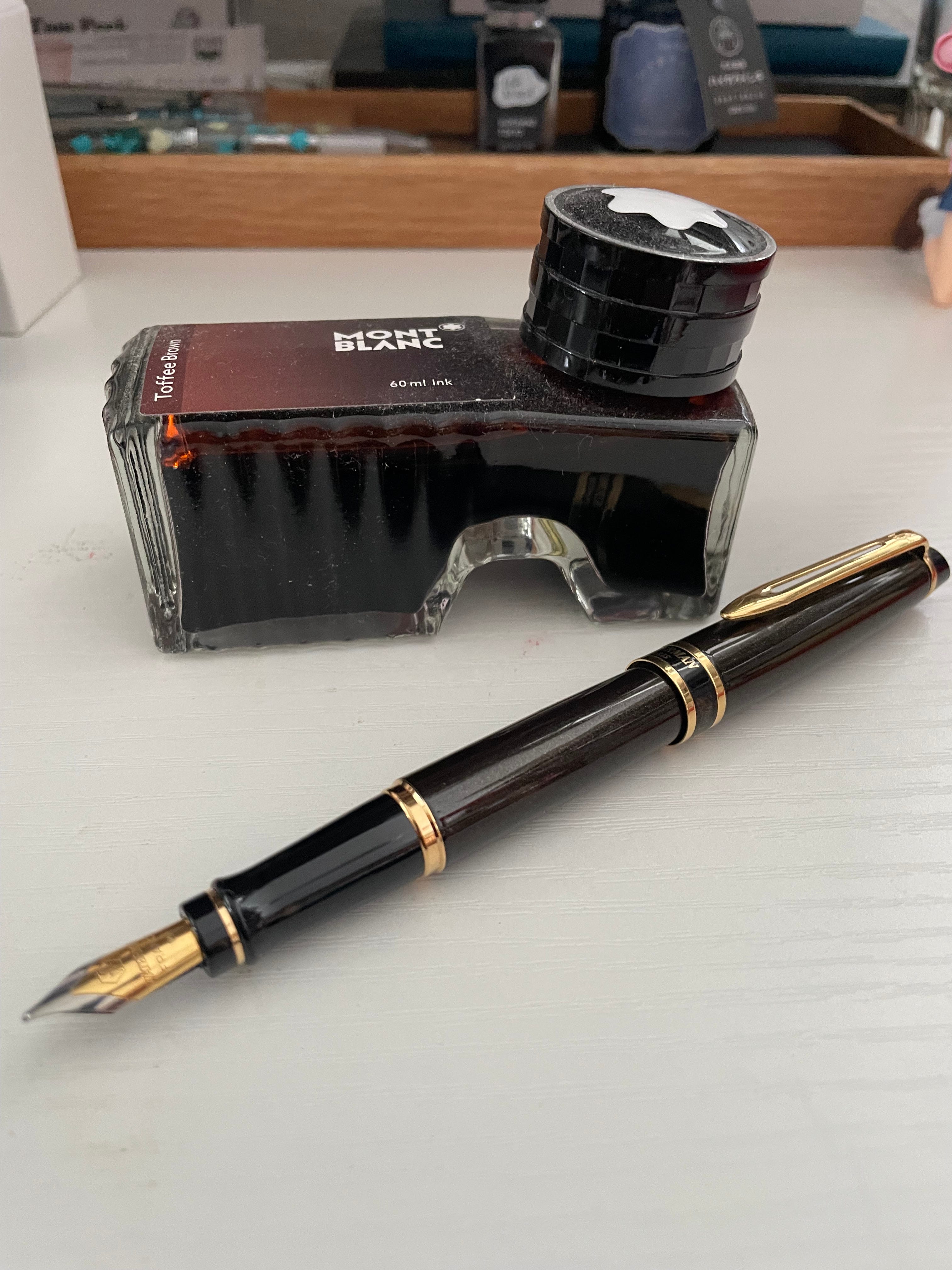
Fountain pens are like cars. Generally speaking.
The best engineered are made in Germany and Japan. Italian-made brands have the sexiest designs but have maintenance issues. Made in America? That phrase doesn’t even enter the conversation when it comes to discussing the most coveted examples. In my personal collection numbering between 100 and 200 pens (I am purposely unspecific, not having done a formal count since I passed 50 pens. Ignorance is bliss when it comes to excessive acquisition), I own high-performing and beautiful examples of German pens (Montblanc, Pelikan, Lamy), Japanese pens (Pilot, Sailor, Platinum), and Italian pens (Visconti, Aurora). My favorite pen, however, is not made in any of those countries.
The Waterman Expert is made in France.
Is this akin to having several cars and leaving your Mercedes, Lexus, and Ferrari in the garage in favor of taking the Citroën out for a spin? Not really. This is where the car analogy falls apart. To be certain, I use my pens equally, mixing them up in a constant rotation, using all in my collection regardless of national origin, nib material, weight, size, or overall cost. I regularly use both the Montblanc Meisterstück 149, which retails for nearly $1,200 and the Pilot Kakuno, which is $7 if purchased in Japan. All my pens give me a wonderful writing experience.
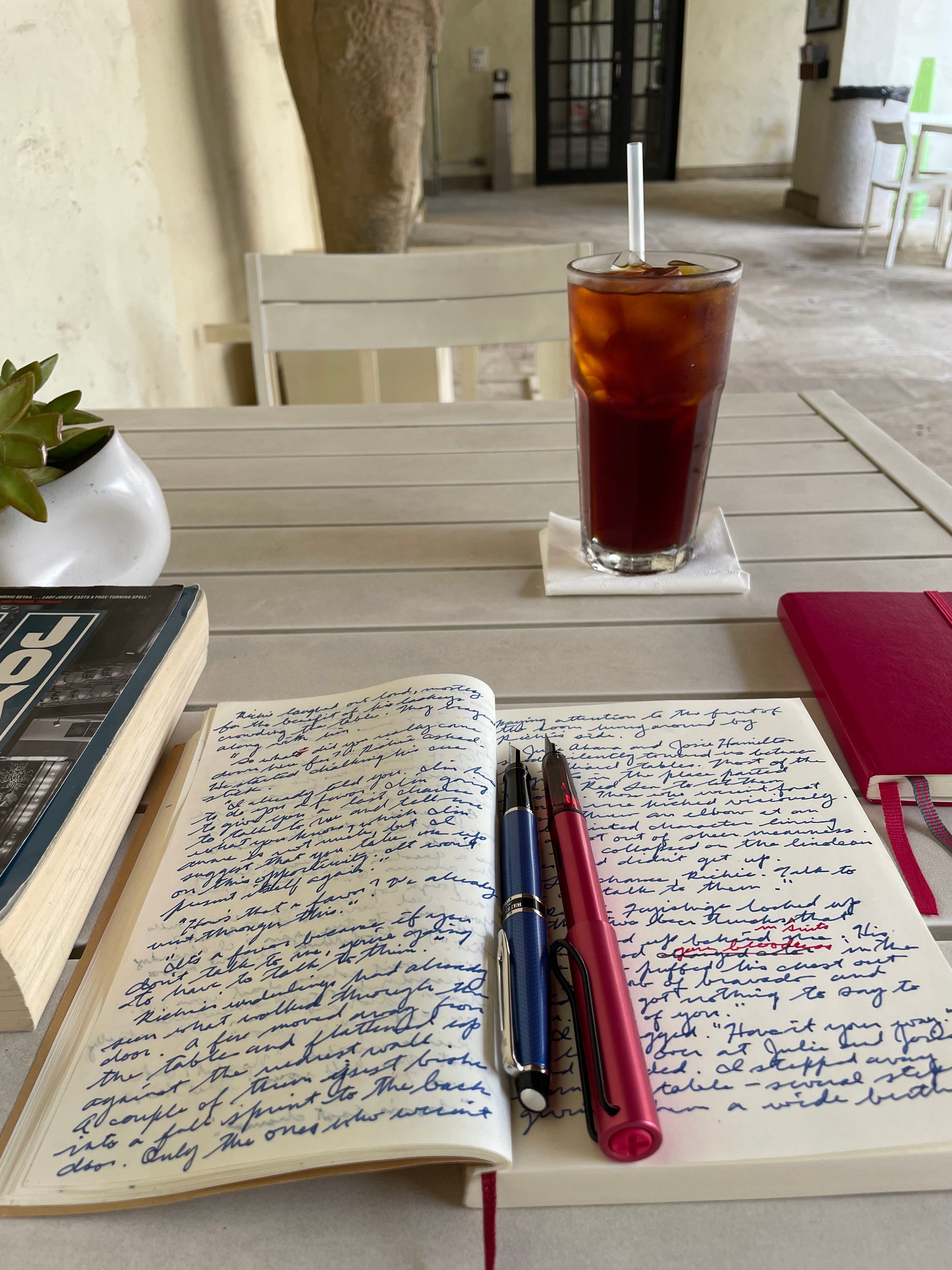
Like all fountain pen users, though, I do have a set of personal preferences, even though my collection is diverse. If pressed, I would tell you that I would pick a larger pen over a smaller pen, and a heavier pen over a lighter pen. Because cursive penmanship was mandatory where and when I was in the second grade (or was it the third grade? Either way, it makes me feel positively ancient), when composing first drafts of my novels, short stories, essays or reviews, I do them in longhand. In cursive. This means I prefer a wet pen with a generous flow. The wetter, the better. Those pens are colloquially known as “firehoses” by fountain pen enthusiasts. And I love a firehose.
Waterman started off as an American company, founded by Louis Waterman, the man credited with the invention of the modern fountain pen. Vintage American-made Waterman pens have a well-deserved reputation among collectors for having the best “flex” nibs, enabling the writer to lay down characters with dramatic line variation. One day, I may acquire one, but I am scared of the lever-and-bladder filling system which looks complicated and difficult to clean. In 1954, during the era in which my novels are set, Waterman’s French subsidiary took over the company and Waterman started manufacturing its pens exclusively in France.
The French-made Waterman Expert fits the bill. It has a decent length and girth (though not as cigar-like in circumference as the Montblanc Meisterstück 149 or pens with a similar barrel), and its brass barrel gives it some heft; in a modern fountain pen landscape dominated by lightweight acrylic barrels, the metal pen has noticeable gravitas. And its nib is the smoothest, wettest writer.
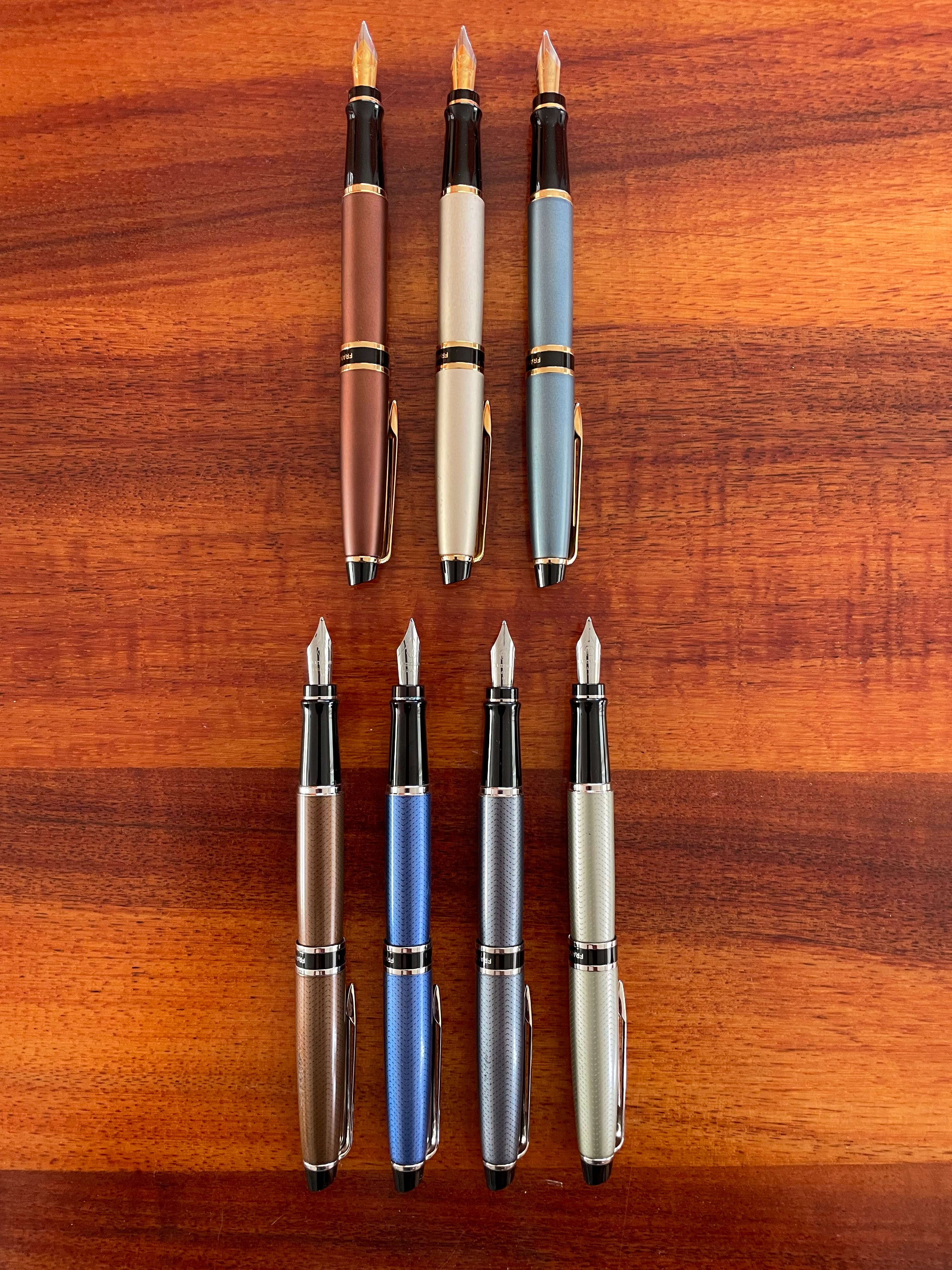
Of course, my preference for the Waterman Expert may be because it was the first fountain pen I used and thus became the yardstick by which I measured all pens I’ve used since. It wasn’t the first fountain pen I owned—that honor goes to the Waterman Laureat, a groomsman’s gift given to me by my first friend to get married for being an usher in his bridal party. At the time I received it, I packed it away somewhere and only recovered it years later after I started using fountain pens in earnest. It’s a wonderful writer, too, albeit smaller and slimmer than the Expert. I started using the Expert first, though, almost twenty years ago, when I had tried the fountain pen of a coworker (I think it was a Pelikan) and raved about the few characters I put on the page with ease. My wife remembered my obsession with the experience and gifted me with a Waterman Expert II in “Smart Brown,” a gorgeous metallic brown lacquer. It’s therefore a sentimental favorite as well as a performance favorite. She was to give me another Waterman Expert II, the second fountain pen I used, in “Smart Blue,” and this pen is the wettest in my entire collection. I penned (literally) the first draft of my first novel, Kona Winds, with these two pens in Moleskine notebooks (this was before I learned there were other hardcover A5 notebooks out there with superior paper, like the Leuchtturm 1917 which I now use for all my novels).
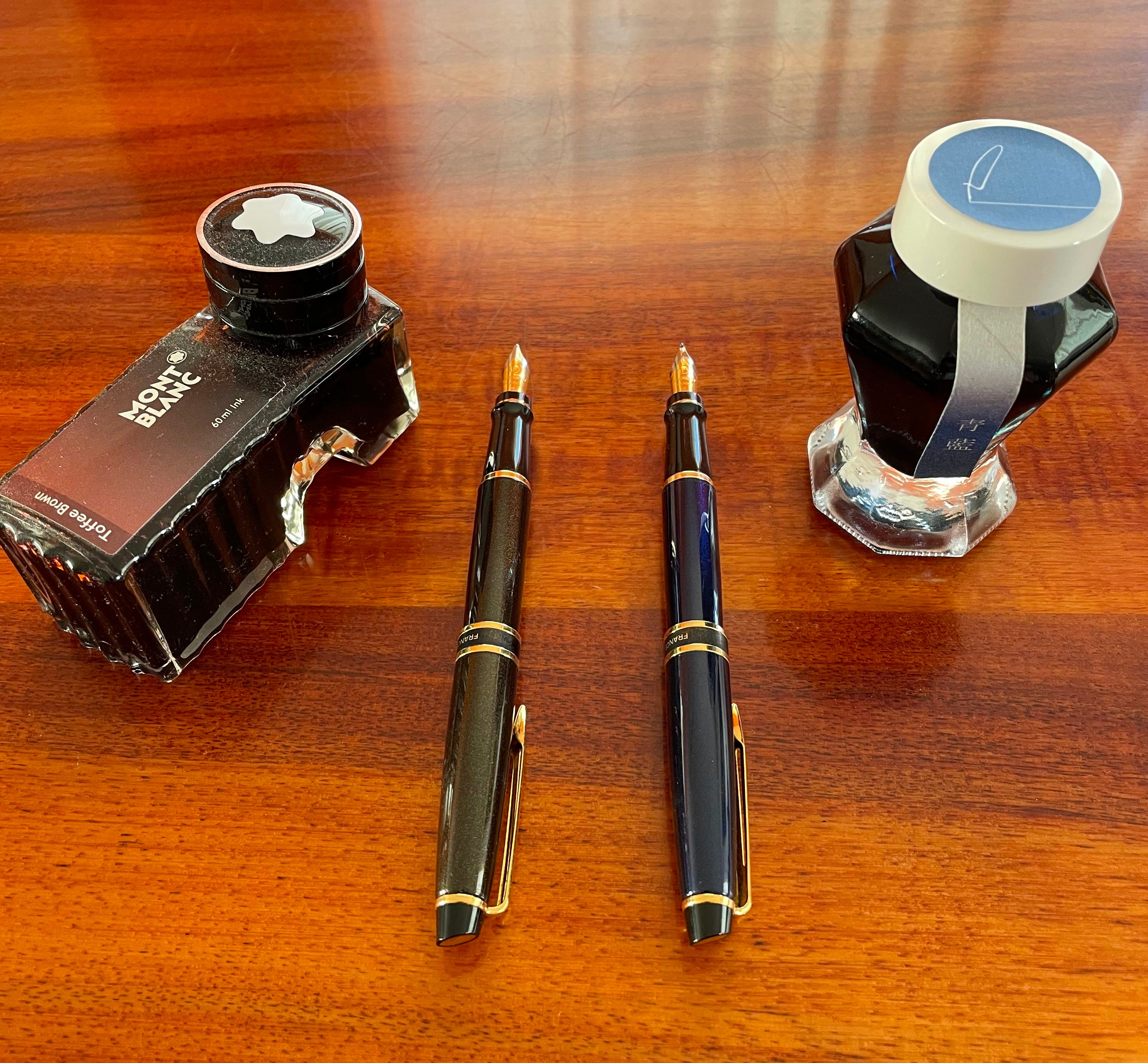
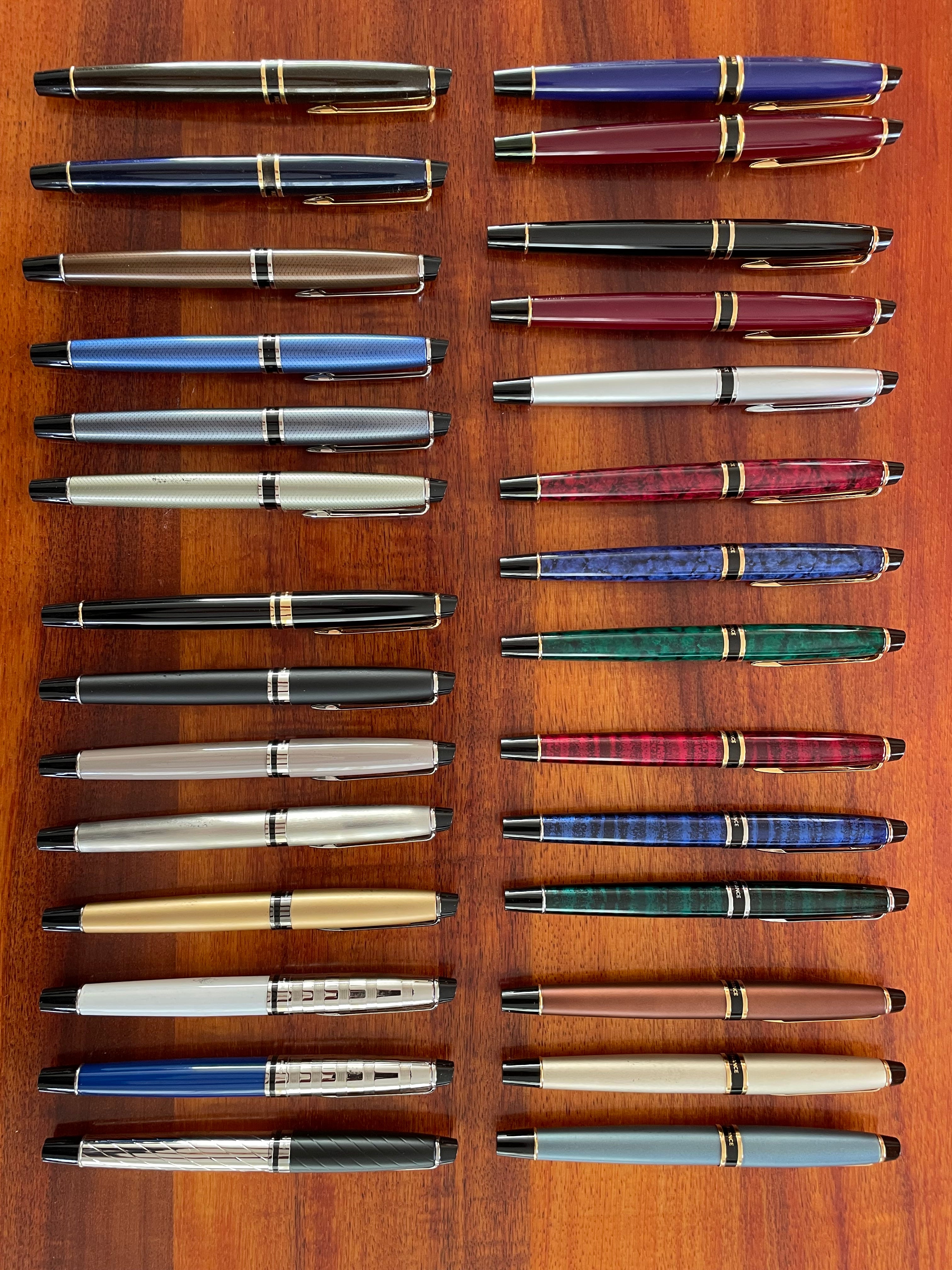
My Waterman Expert collection contains models in all three “marks” or “generations”. I have two Waterman Expert I pens, the first iteration of the model with its distinctive large breather hole in the nib. Admittedly, it is a drier writer than the Expert II and Expert III (the latter two are really the same pen with superficial differences in the trim), and I acquired them to try them out. While they are decent writers, I prefer the later Experts, as the Expert I also has an acrylic “outer” barrel, which does not look as pleasing as the enameled metal barrels of the later models. I have collected all but three or four of the Waterman Expert II offerings, and I have eight different Waterman Expert IIIs. In all, I presently own 28 Waterman Experts, more than any other model of any pen.
The steel nib of the Waterman Expert is what enthusiasts refer to as a “nail”—hard and without “flex” or “bounce”, which means little to no line variation as the tines do not spread. But because the nib is both firm and wet, I find I can produce words almost twice as fast as I can with other nibs. While I do appreciate the gold nibs I have with some amount of flex, the speed of the hard, fast-flowing Waterman Expert means the words go down on the page almost as quickly as I can think of with them in my head. It’s as close as I can get to real-time expression on paper. Many fountain pen users complain that a heavier pen makes their hands tired; they consider lighter acrylic barreled pens easier to write with. I disagree (they must have dainty, fragile hands). The weight of the brass barrel has a reassuring substantial heft and helps the hand with downward strokes in a natural pull. The metal barrel, even enameled, is cool to the touch.
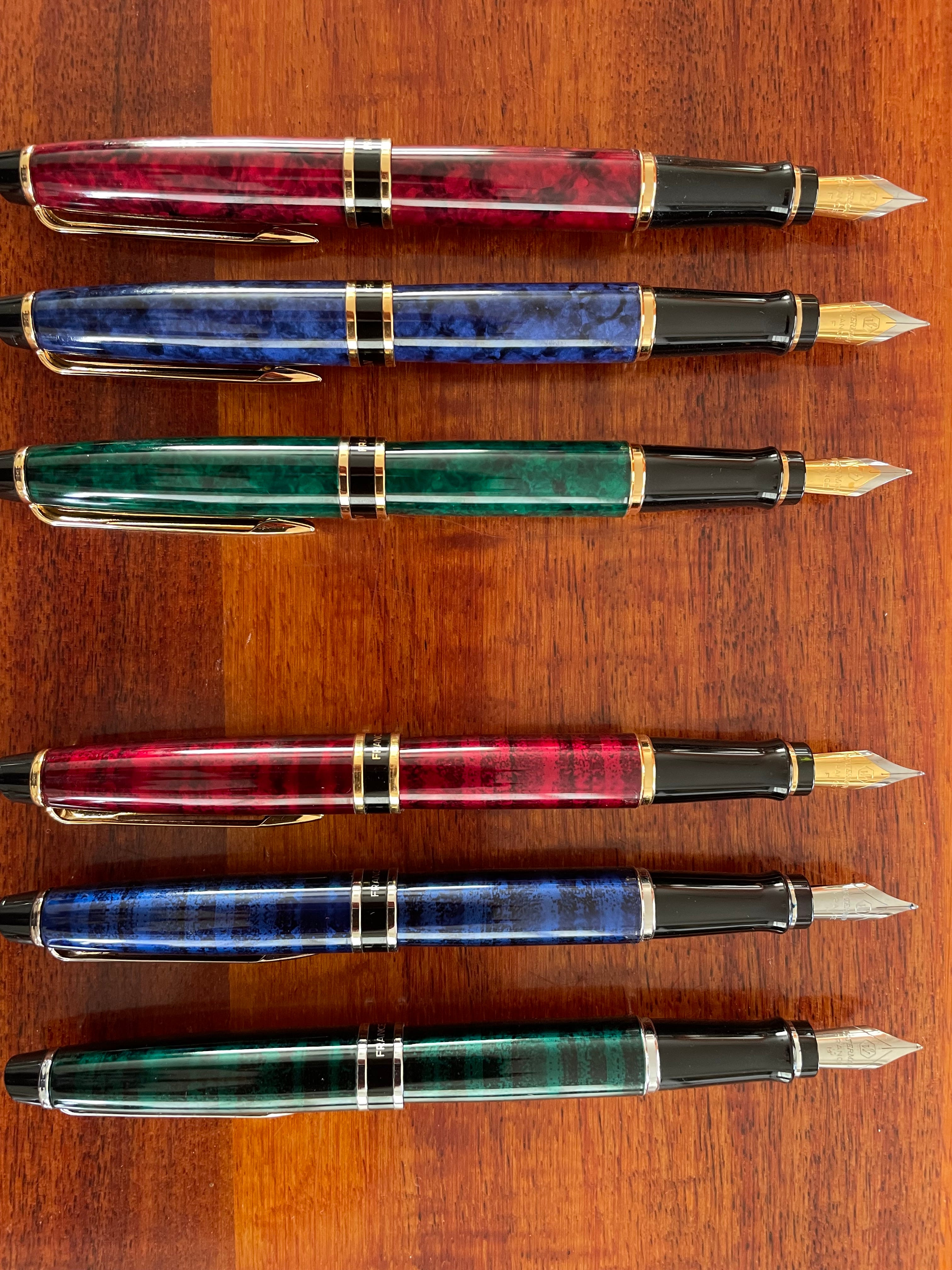
The Expert is a handsome pen. It’s slightly tapered at both ends, and its cap ends in a chisel point, giving it a rakish angle and a decidedly mid-century appearance. The clip flares slightly and resembles a necktie; it looks stunning in both gold and silver tones. The colored enamels are beautiful, while the black and stainless models are understated and elegant. I believe the Waterman Expert also has the most gorgeous two-toned steel nib. It’s a steel nib that has the same visual charm as a gold nib. Newer fountain pen enthusiasts deride Waterman as a “gift pen” or “executive pen” (read: boring), but I find that aspect of their design is at the center of their appeal.
So, yes, while I enjoy getting behind the wheel of my German, Japanese and Italian acquisitions and experiencing their performance, the unassuming French-made vehicle delivers the smoothest ride of all.
*As an Amazon Associate I earn from qualifying purchases
always enjoy these ecstatic forays into the pleasures of writing with manual instruments on paper. I once debated with a (newfound) friend on Twitter the virtues of writing with pen or pencil on paper. alas, she was not to be convinced and stuck to her smartphone writing.
Love when you take us into the stories and experiences of your passions. Gasp! The collection photos are gorgeous (always!).
So special that your favorites are your first and gifts from your wife.